Our in-house laboratory
The laboratory came first.
Most dental practices send their crowns, bridges and veneers to an outside laboratory. This one has its own, and it has worked for this practice alone since 1996.
In 1975 West Virginia University accepted one out-of-state student from almost 600 applicants. Greg Boyajian, a new chemistry graduate, was not that student.
So he opened a dental laboratory in Clarksburg, West Virginia, with his brother Ben, who went on to earn a Ph.D. in dental materials, and his wife Jessica. They attended convention after convention and course after course. The laboratory grew to serve more than 100 dentists across the Northeast, specializing in crowns, bridges, veneers, full-mouth reconstruction and esthetic dentistry.
It kept serving them through dental school, through his general practice and through his specialist training in Florida. In 1996 it became private. "We downsized our operation so we could focus on our new practice in Palm Beach," Dr. Boyajian explains. Jessica operates the laboratory as ceramist and technician.
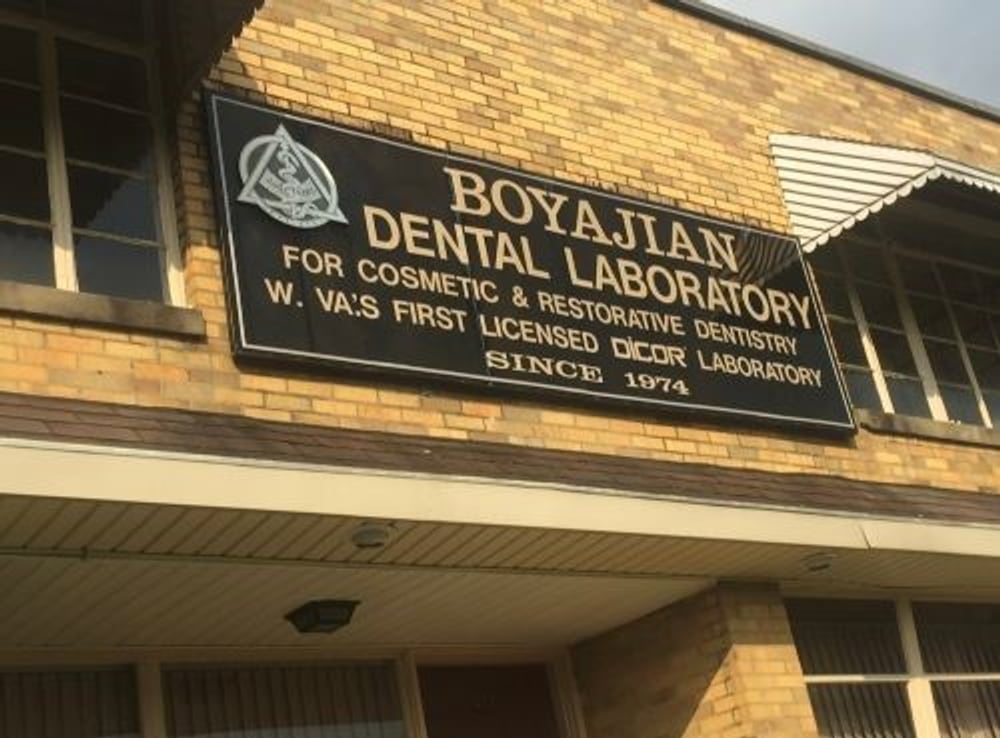
The original sign in West Virginia: “For cosmetic and restorative dentistry. W. Va's first licensed Dicor laboratory.”
Made here
What comes off the bench.
Why it matters to you
The difference a lab down the hall makes.
One conversation, not two
The dentist who plans your case and the ceramist who makes it work in the same building. Questions about shape and shade are answered across a corridor, not by courier.
Shade and shape, checked in person
Adjustments that would otherwise mean sending work away and waiting can be made on site.
One practice only
Since 1996 the laboratory has refused work from other dentists so it can concentrate on this practice's patients.
Quality and speed
The practice describes its work as excellent quality and top speed, and puts both down to its private in-house laboratory.
Always learning
“We are all on a path of continuous improvement.”
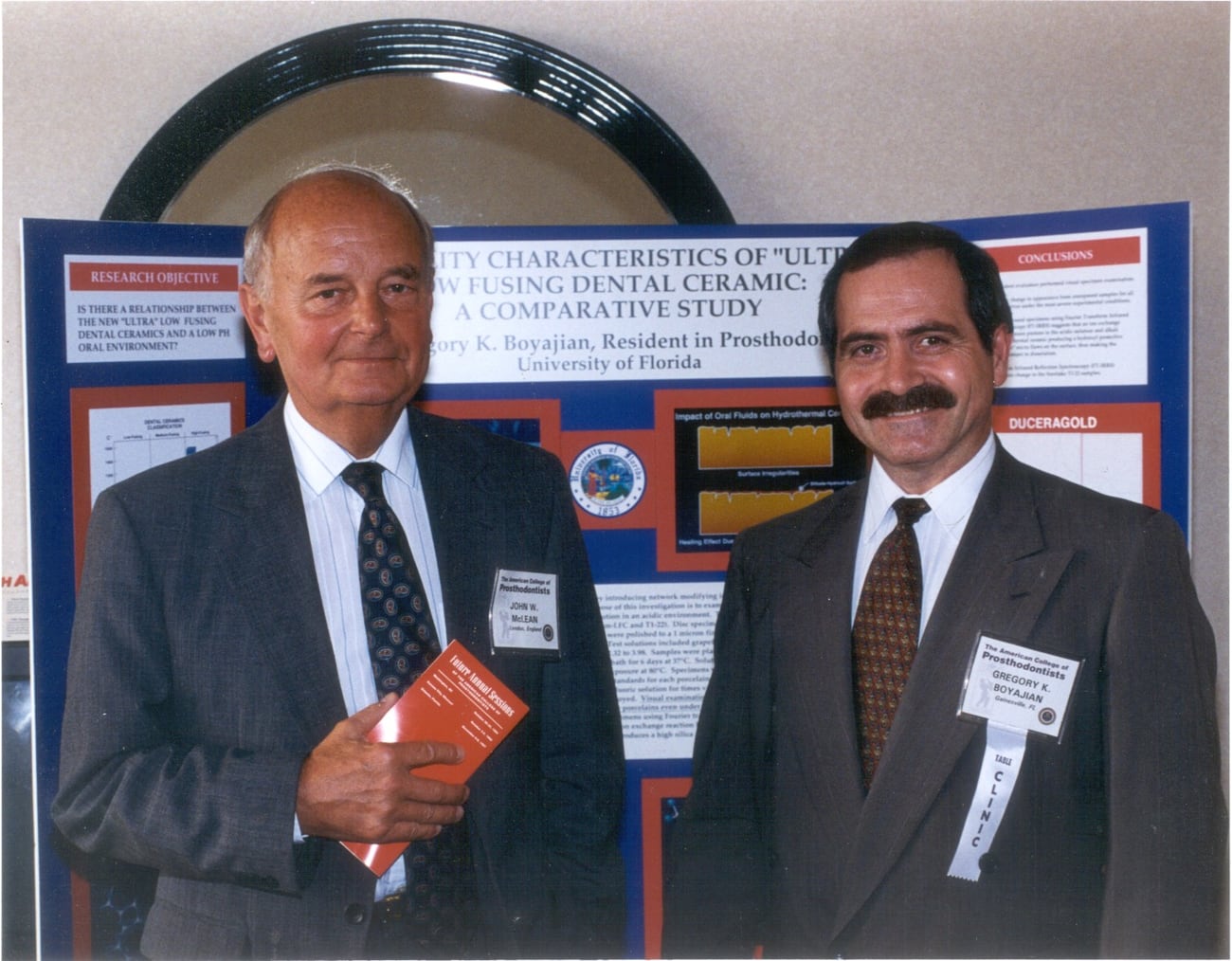
The laboratory has kept up with new technology for decades. Jessica reads the new literature and does not hesitate to give a new product a chance. Dr. Boyajian's own training runs from the Dentsply crown and bridge course in 1974 and the Ceramco advanced technique course in 1978 to CEREC computer-generated ceramics in 1992. At the University of Florida he tested three new ceramic systems and proposed a fourth classification of dental ceramics, "ultra-low fusing", which his mentor Dr. Kenneth Anusavice introduced into the 10th edition of Phillips' Science of Dental Materials.
235 Peruvian Avenue, Palm Beach
The first step is a thorough examination.
Request an appointment online, or call the office. The scheduling coordinator confirms every time by phone.